Skip to content

Nailing and machining line for reel flanges

LC-FA Line

The LC-FA is our fully automatic nailing and machining line for cable reel flanges. The first Cablematic left Vic in 1988; the first complete line, in 2012. It is built in four models according to flange diameter — and since no two reel manufacturers are alike, each line is custom-configured: from the number of pre-nailing tables to the operations of each Cablematic.

Choose your model.

The first in the family and the best seller: flanges from 800 to 2,800 mm.

The balance between diameter and pace that most of our customers choose. With the right configuration, a finished flange every 60 seconds.

Cycle per flange
60 – 120 sec
Operators
1 – 4
Flange Ø
800 – 2,800 mm
Flange thickness
35 – 110 mm

Cycle time depends on the number of Cablematics (2 to 4) and on the operations required for each reel: every line is calculated individually.

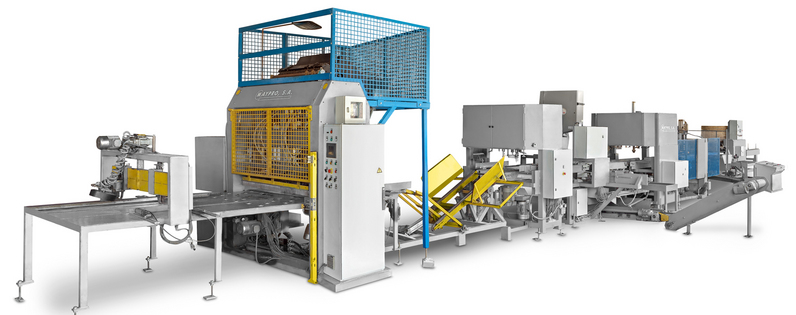
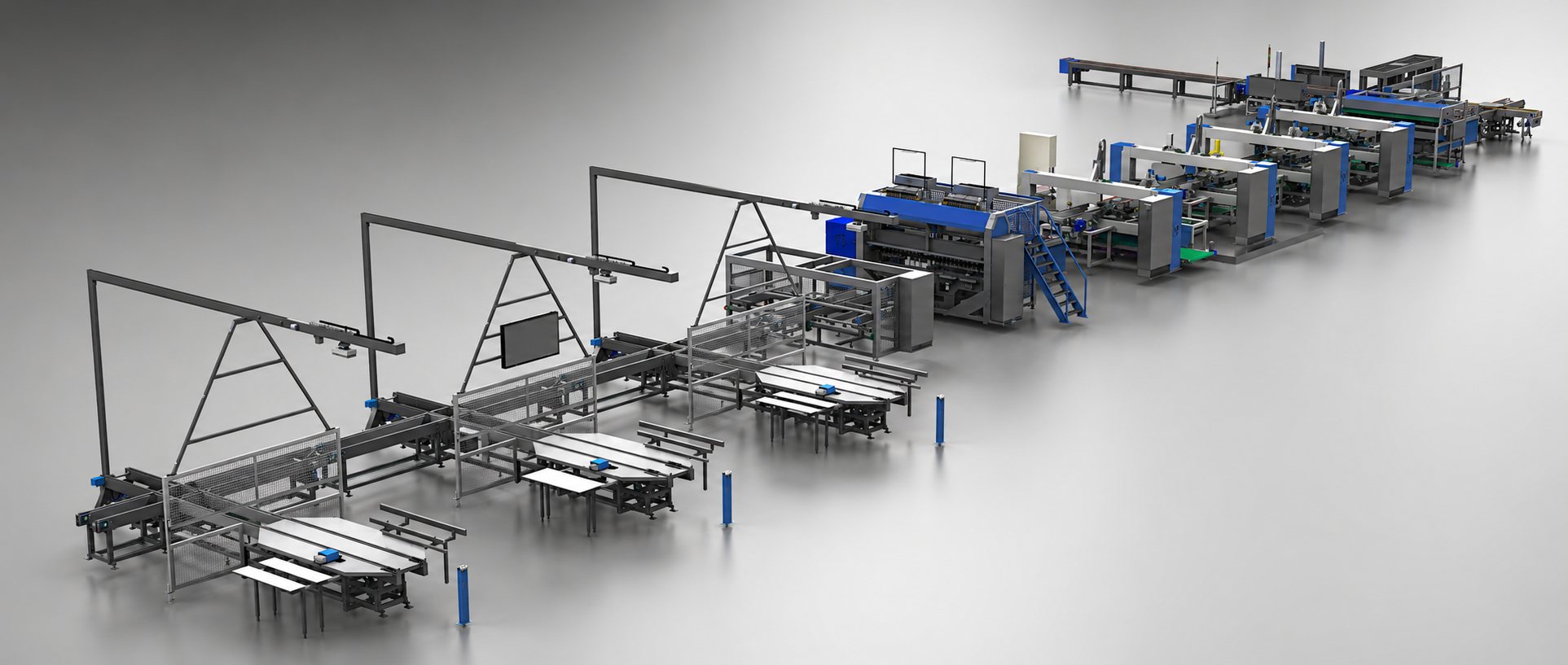
One of MAYPRO's first reel flange nailing and machining lines, with the nailing machine and the Cablematics in lineInstalled LC-88-FA line: three pre-nailing tables, nailing machine and train of CablematicsCurrent LC-FA line: three pre-nailing tables with screen, nailing machine with platform and four Cablematics
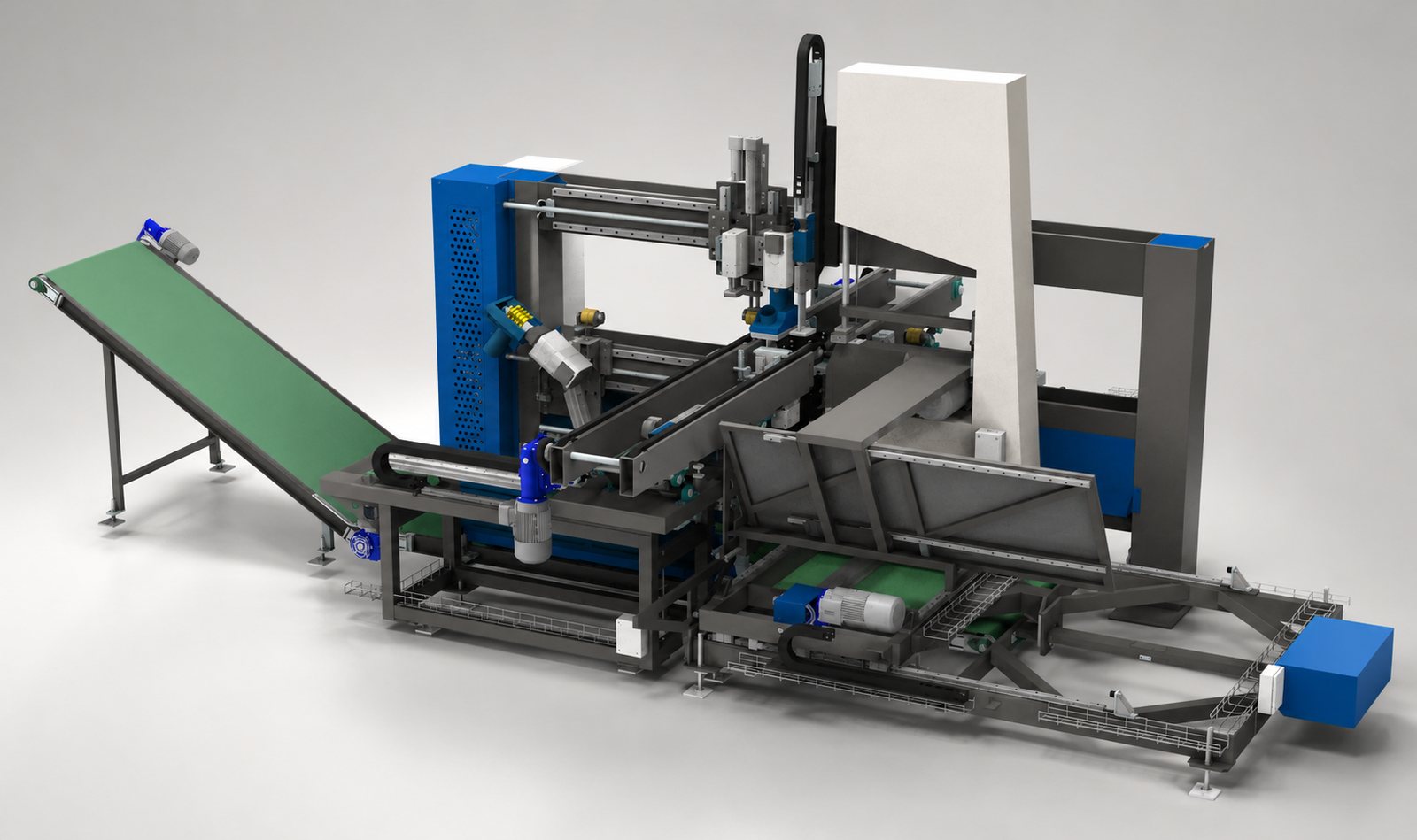
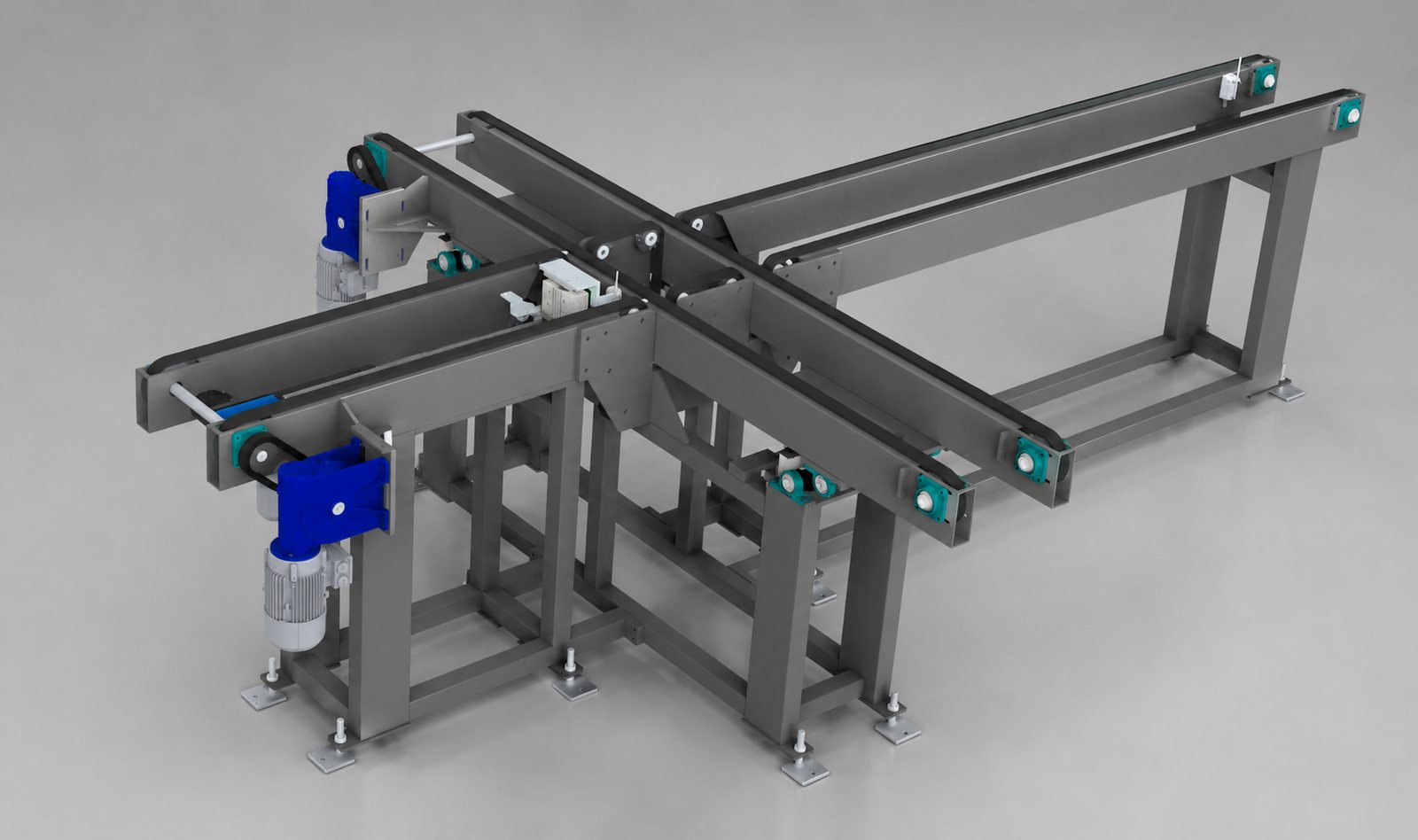
Plan view of the LC-FA-88: module sequence from infeed to the outfeed stack
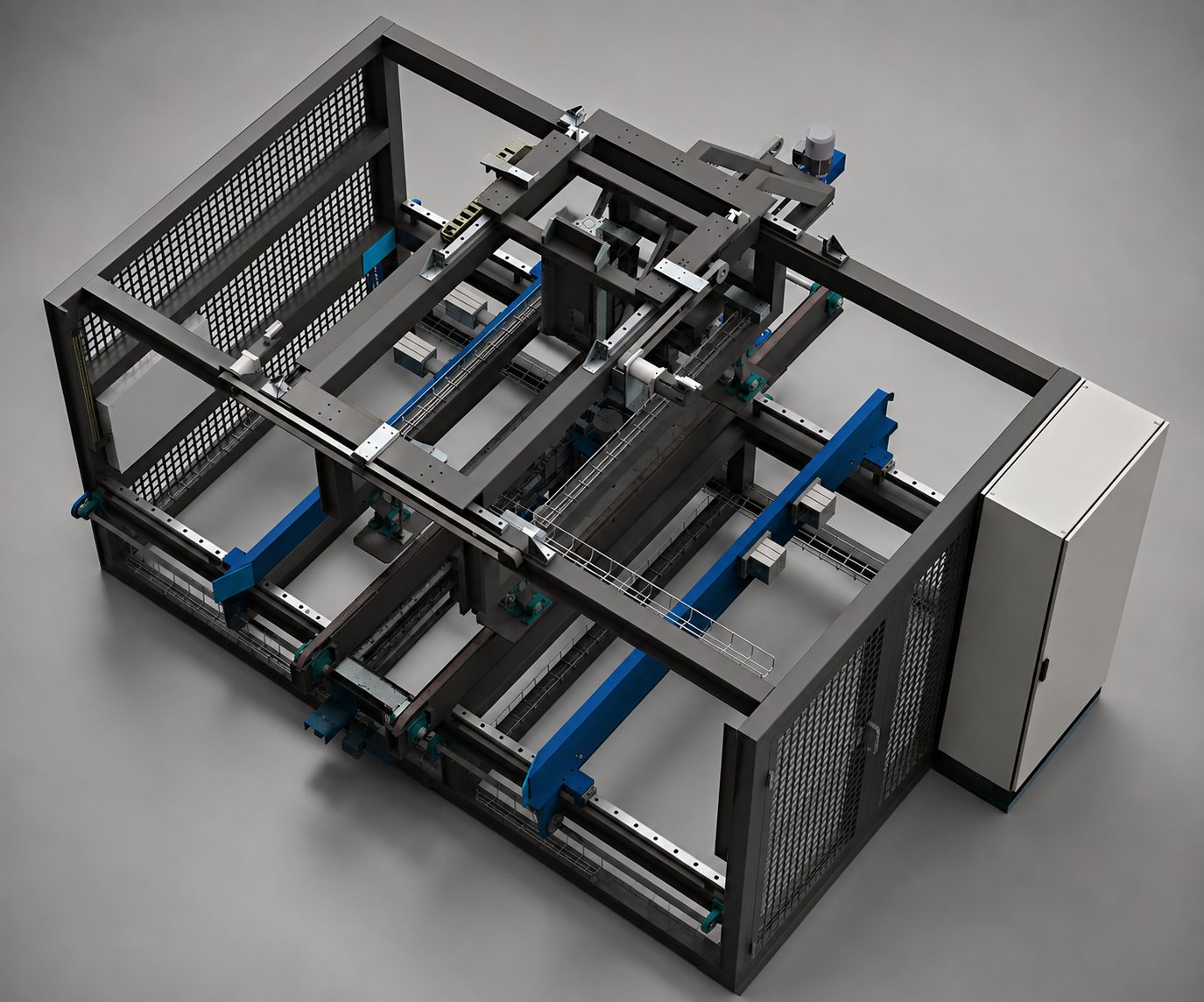
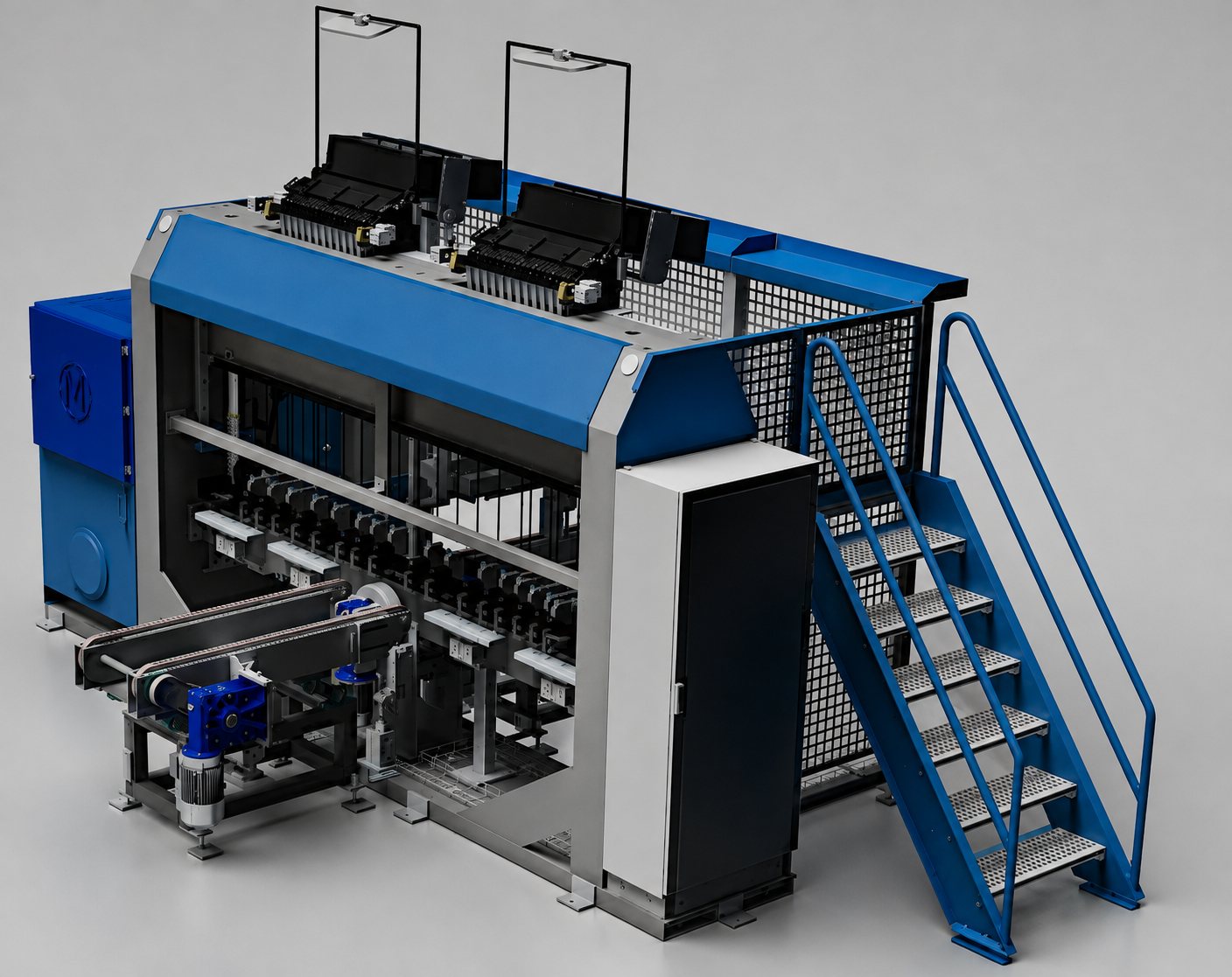
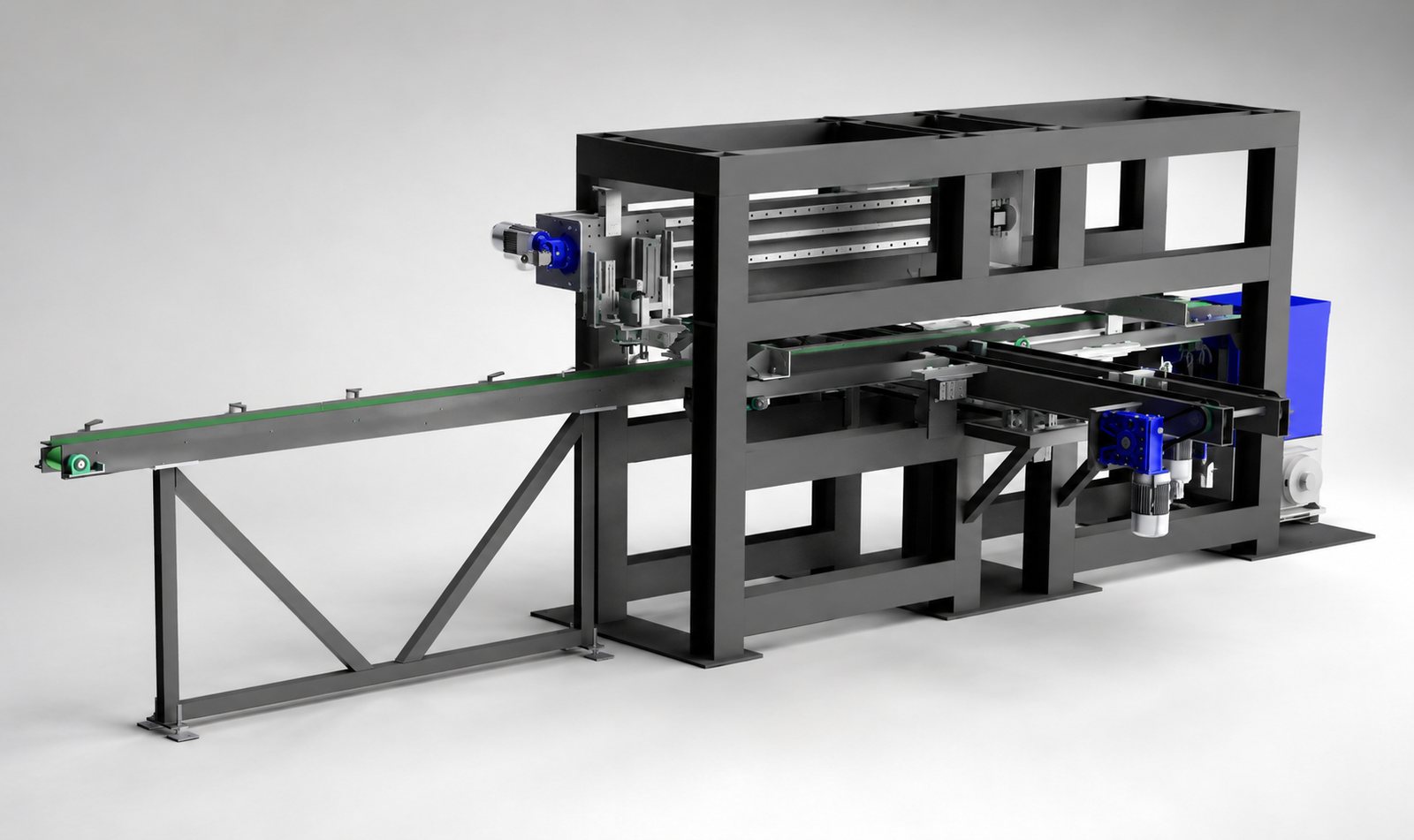
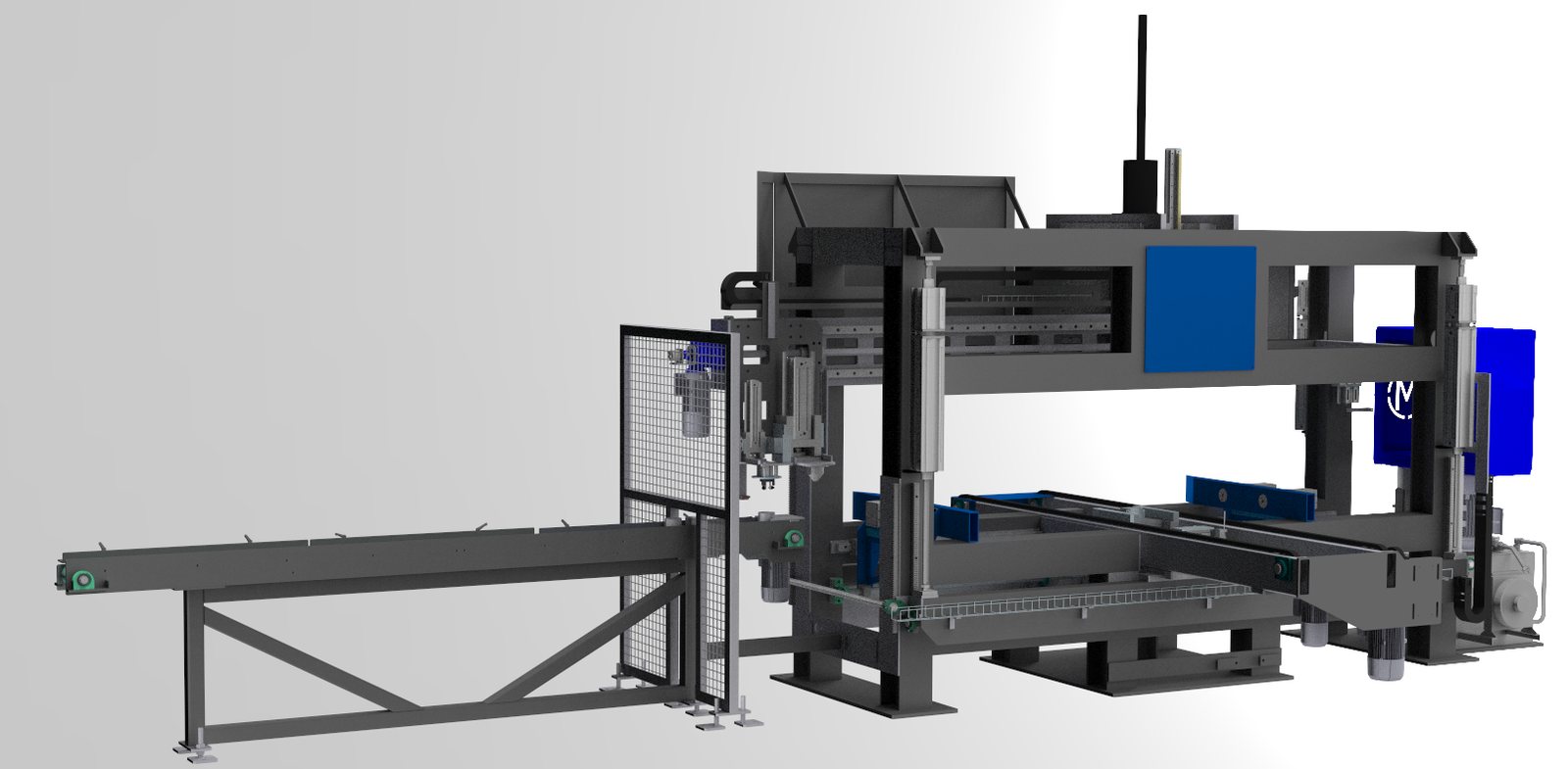
The LC-FA-88 modules, in process order · see the process route step by step

The flange process route

What the line does, step by step.

Each step, with its module: click the image to open the module's data sheet.

Drills the centre

The centre hole through which the reel shaft will pass. The same module can integrate the recess for the barcode or the plate holes — usually 4, 6 or 8 per flange.

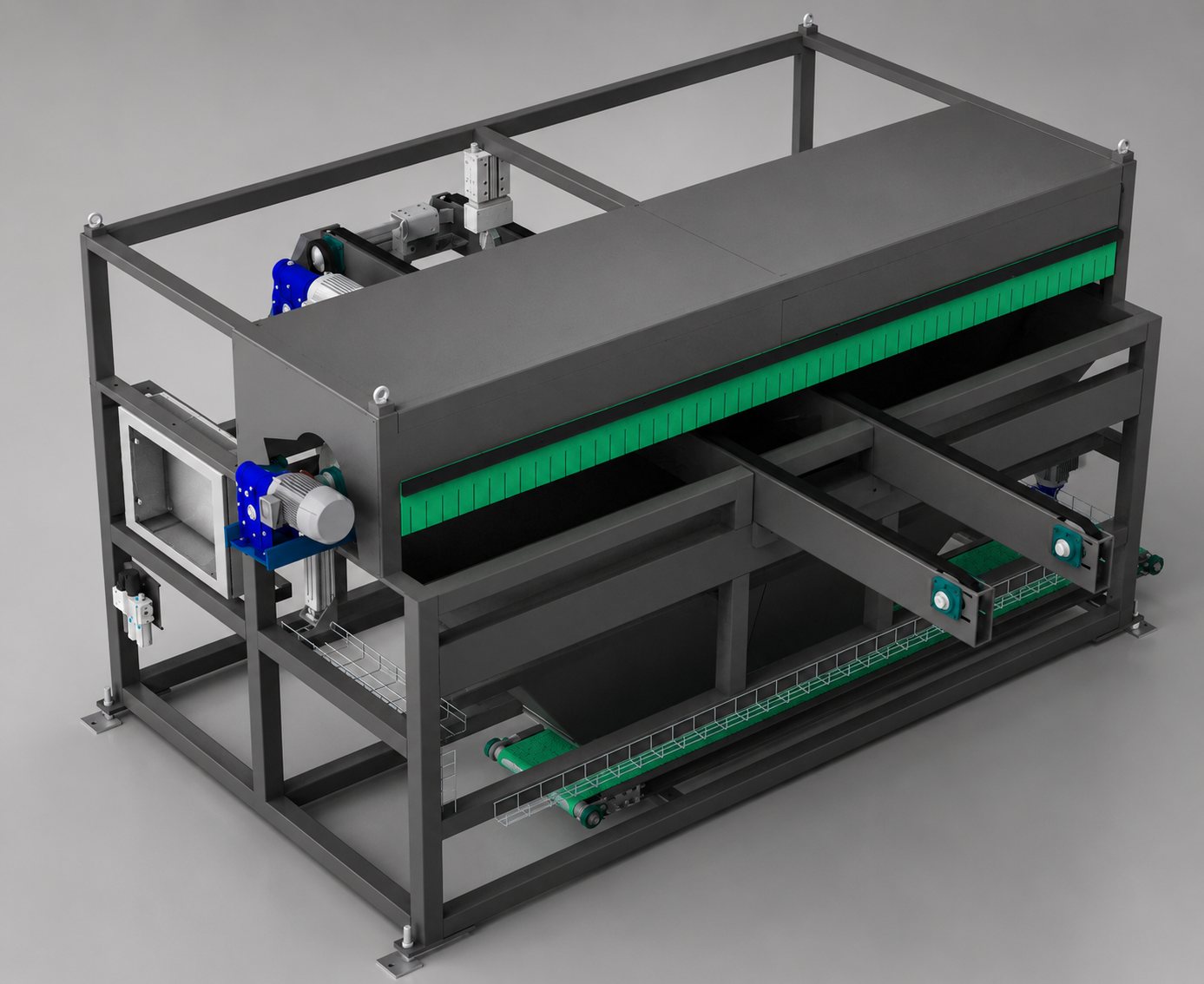
Nails the flange

The hydraulic nailing machine nails the layers together of boards with 30 nails per cycle: bulk nails, automatic clinching and automatic rotation of the flange.

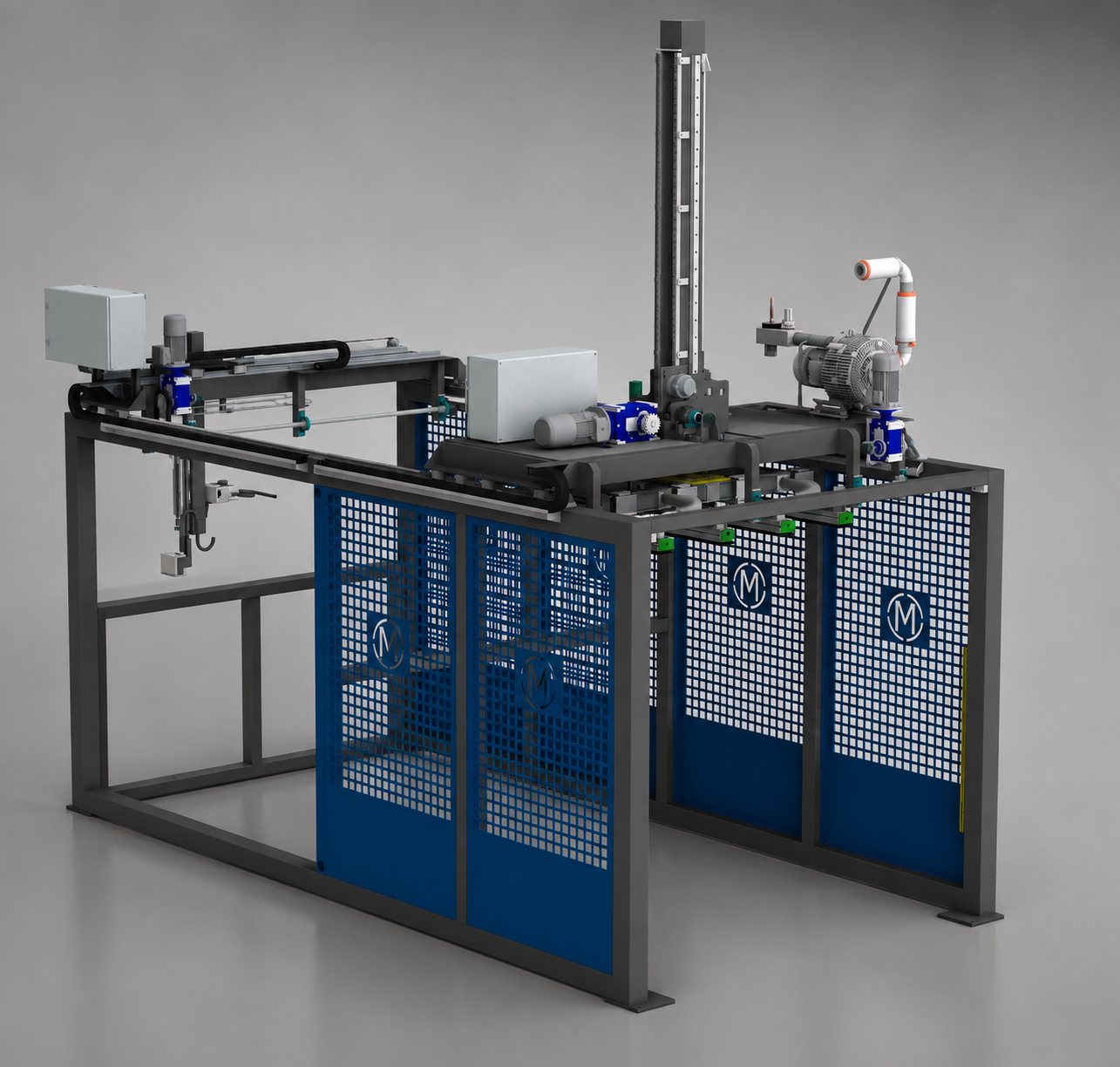
Presses in the bushing

A conveyor accumulates the bushings (the steel tubes at the centre of the reel), a gripper picks them up and the press inserts them into the flange, which has been centred beforehand.

Lifts the flange

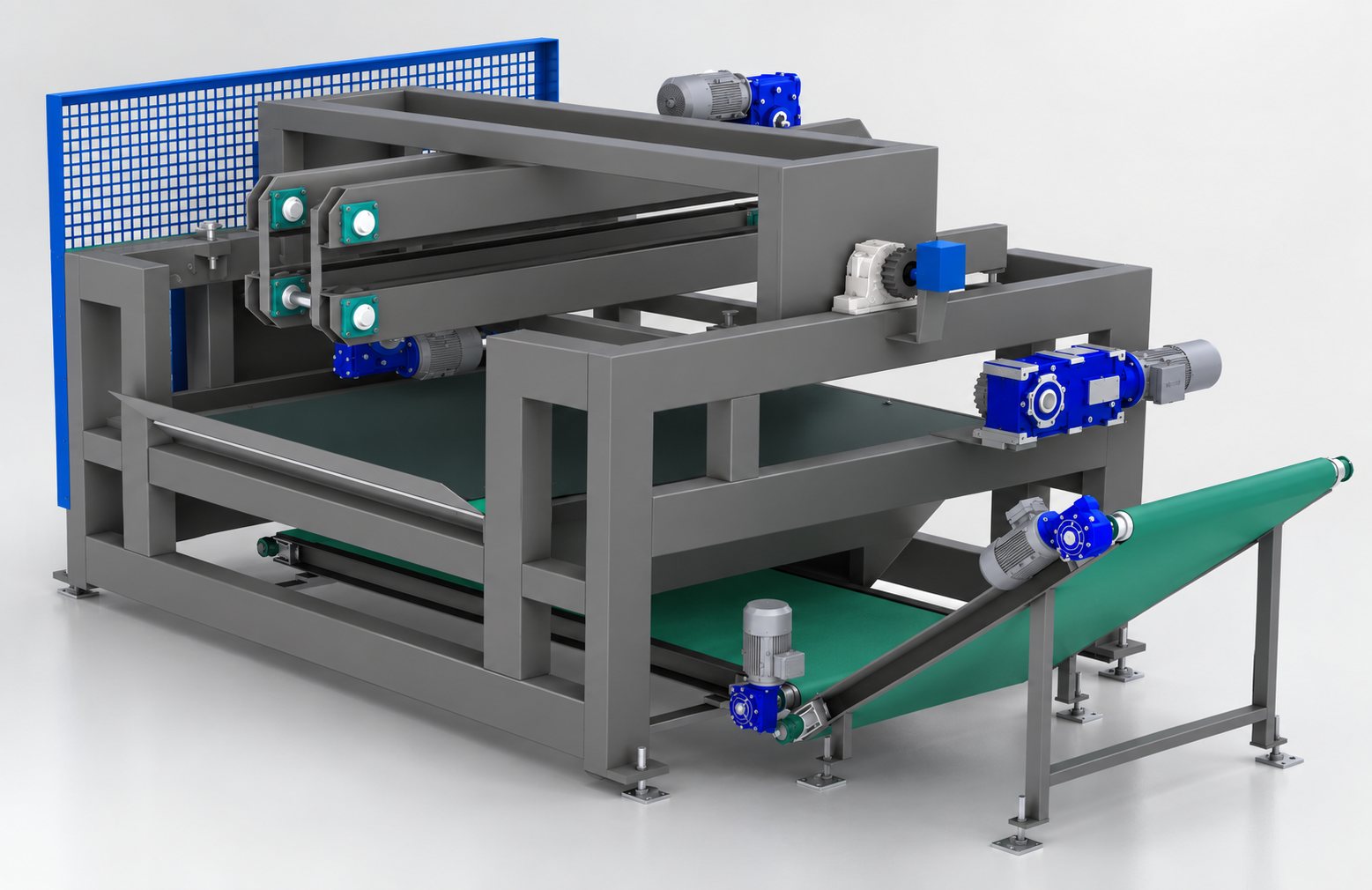
The lift raises the flange to an upper level of the line, so that the operations on its underside can be carried out in the Cablematics.

Short of floor space? The lifting press presses and lifts in a single module.

Machines the flange

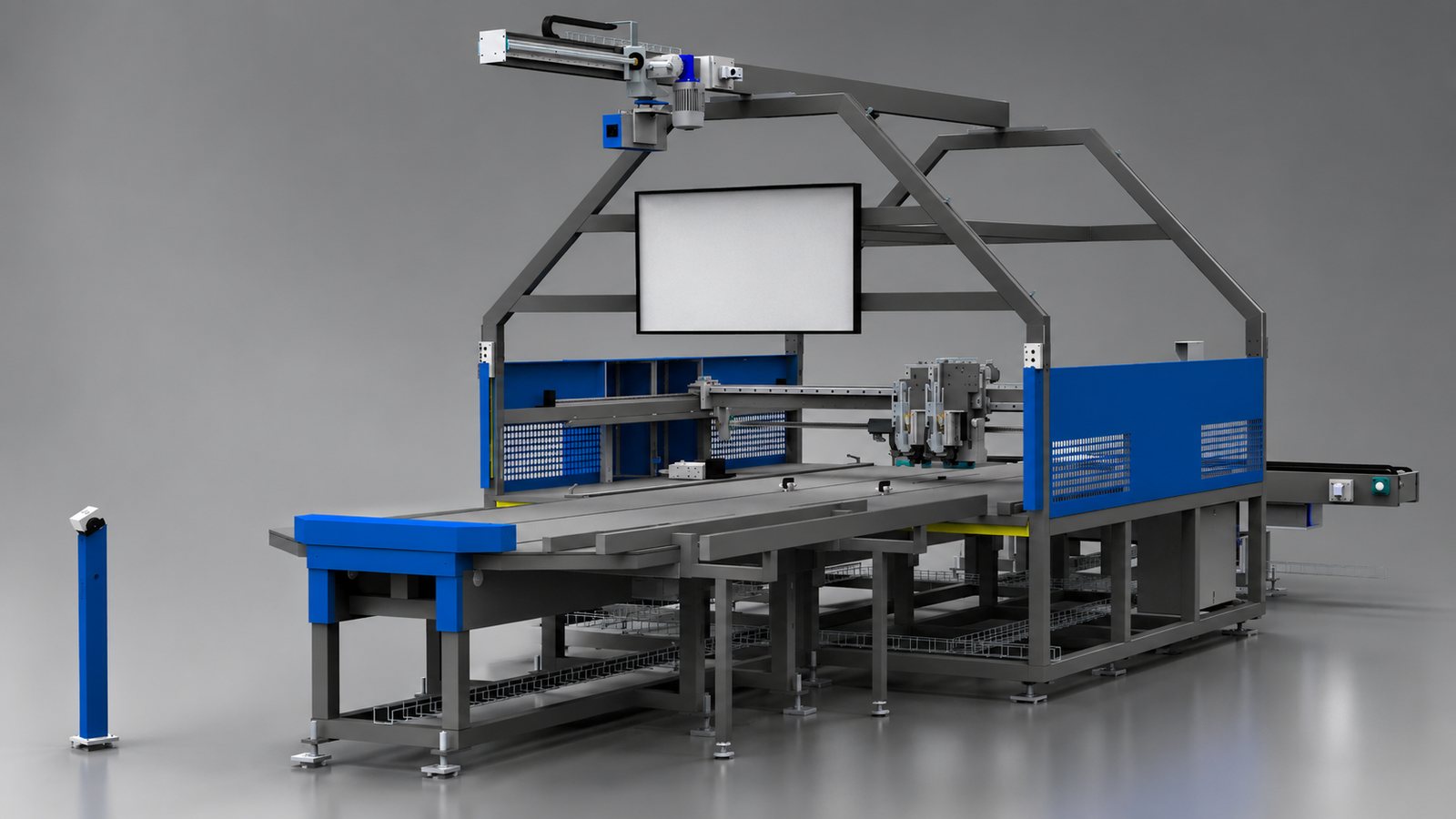
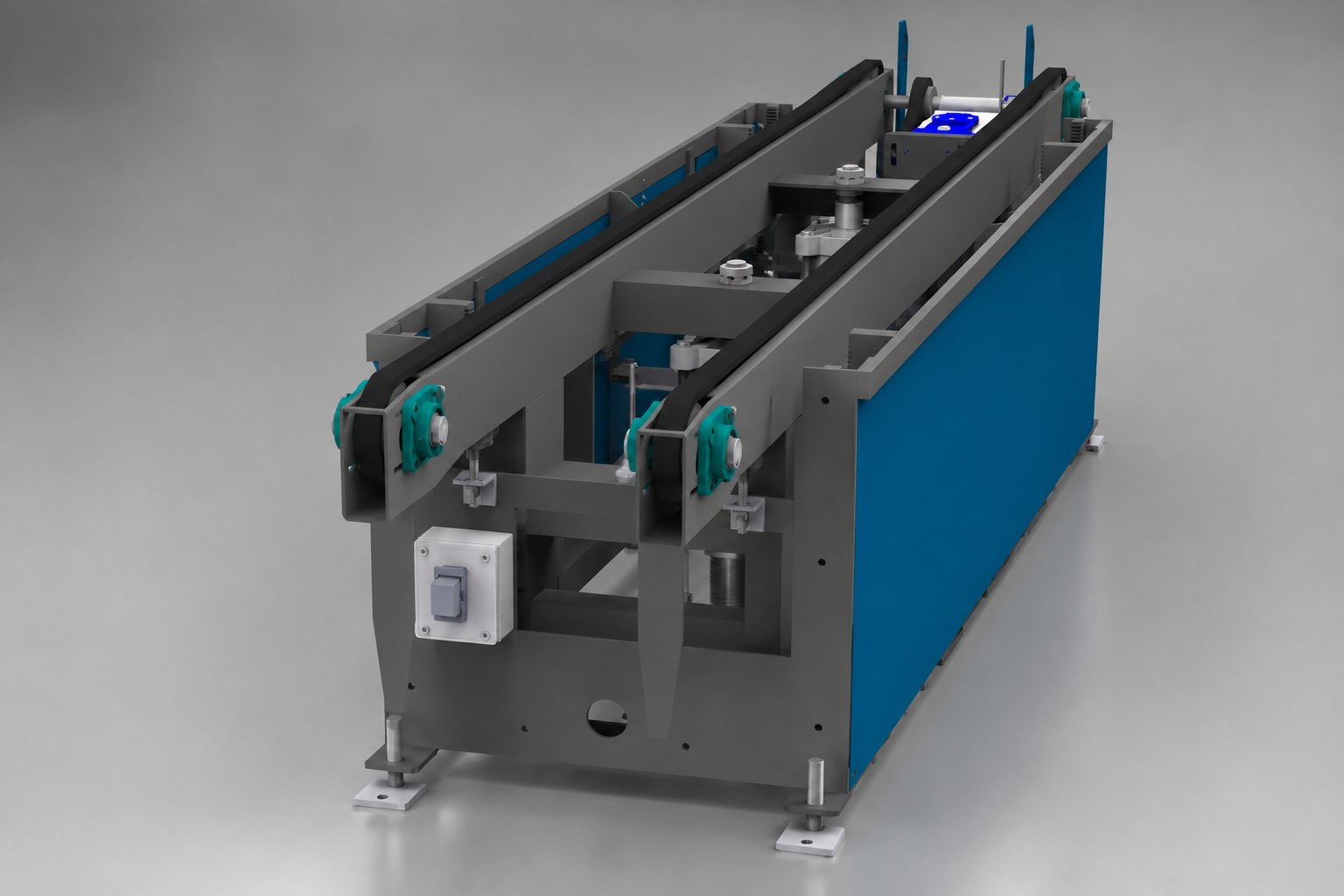
The heart of the line: 2 to 4 Cablematics, each with its own operations — diameter cutting, groove, chamfering, tie-rod holes, drive holes, cable outlet… It is the most customisable part of the line.

Cleans the flange

A brush leaves the flange free of sawdust and chips before the outfeed. Branding, if required, is integrated here or in a Cablematic.

Delivers the stack

The transfer brings the stack to the forklift: a roller transfer so the forklift can enter from the side, or a chain transfer to pick it up from the end.

Missing a module? We have many more than those shown on this website, and we design whatever your plant needs. Talk to our engineering department

In operation

See the line at work.

0:39
An LC-FA at our plant A line assembled at our plant in Vic, running with timber: the flange enters the nailing machine, which nails it as it turns; in the Cablematic, the column holds it, the cutters start cutting the diameter, the spindle centres it and turns it, and a drill bores a hole in it.
0:27
One machine, many sizes A run through the line: pre-nailing, nailing, diameter cutting, drilling and the finished flange coming out.
0:29
A recent LC-FA-66 The current design of the line: centre hole, automatic nailing machine, band saw with its enclosure and the flange coming out.
0:23
From pre-nailing to nailing, at a customer's plant At a customer's plant: the boards go across the pre-nailing table, the flange moves on to the centre hole and enters the nailing machine, which nails it and turns it step by step until it is complete.
0:24
Cutting the diameter of a large flange The flange turns on its centre under the gantry: the board ends are trimmed off until it is round, while a cutter opens the groove.
Full videos for customers

Complete cycles, format changes and the detail of every module, reserved for customers with access.

Want to see them? Write to us

Enter the customer area

Layout options

The line adapts to your plant.

These modules are not part of the process: they are added only when the plant or the finish calls for them. The 90° turner can be placed at different points along the route to adapt it to the plant; the turner, which is uncommon, only when the underside of the flange is to be marked or worked on.

Automatic format changeover

From 600 to 3,300 mm: format changeover is done from the screen.

Enter the flange diameter and thickness and the line adjusts itself: centre hole, nailing machine stops, press, Cablematics and stacker reposition automatically. All models feature automatic changeover — and if you prefer, any module can be ordered in a manual version.

And like every MAYPRO machine, the line can be monitored from your phone — consumption, status, output and alarms in real time — and supports remote connection from our offices for immediate assistance.
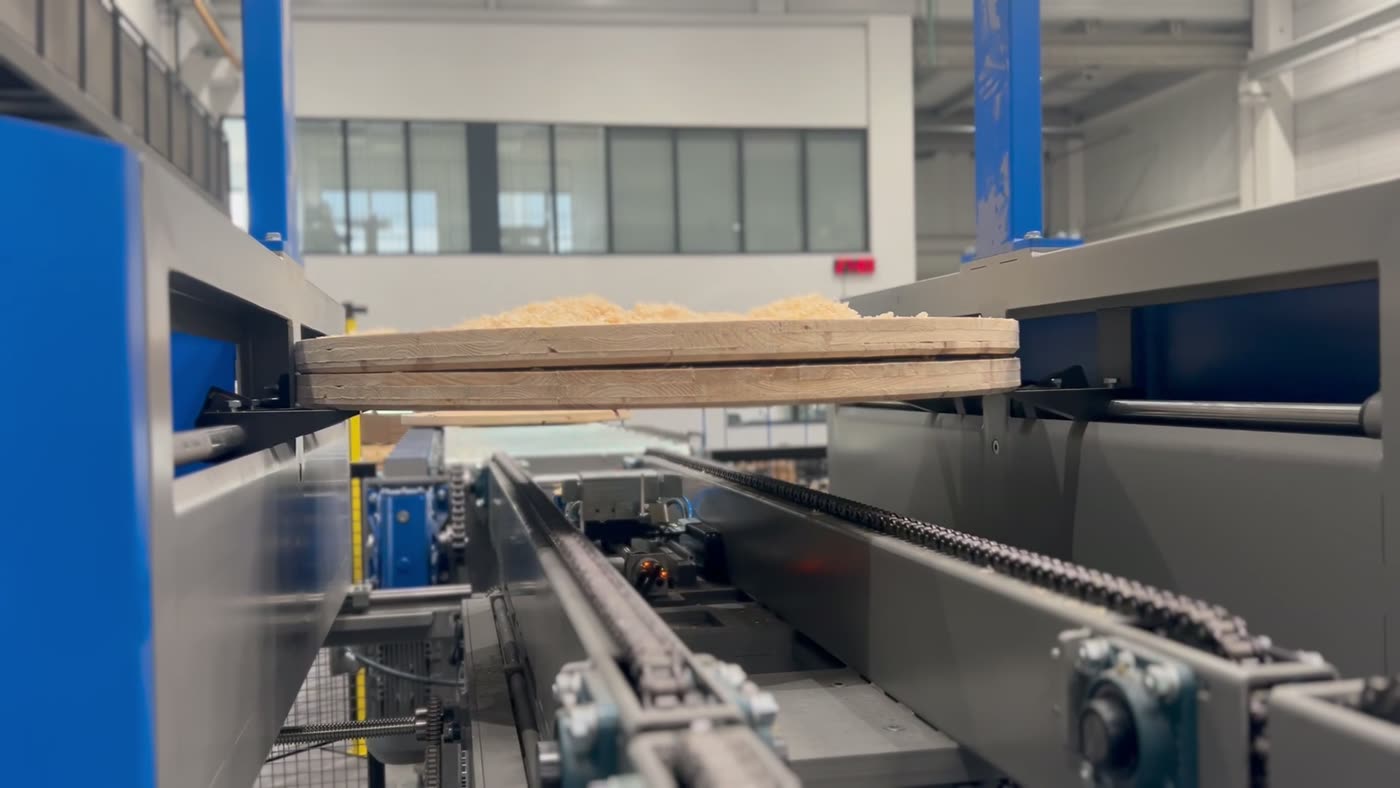
A freshly machined reel flange travelling along the conveyors of the LC-FA line
Ø 1800 · 80 mmCURRENT FORMAT

Value for money

No two reel lines are alike.

Every reel manufacturer wants something different, and the LC-FA is designed for exactly that: you choose the diameter, the number of pre-nailing tables, how many Cablematics and which operation each one performs. Always at the optimum point of the curve: real output, built for decades, and the value for money that sets us apart from the big international manufacturers.

LC-FA OUTPUT → PRICE → OPTIMUM POINT
Beyond this point, every second of cycle time gained comes at a very high price.

Which one is yours?

Model What defines it Cycle (s) Operators Flange Ø Thickness
LC-FA-66since 2015 The compact format: flanges from 600 to 1,200 mm in diameter. 40 – 90 1 – 4 600 – 1,200 mm 35 – 80 mm
LC-FA-77since 2013 The intermediate step: flanges from 800 to 2,000 mm in diameter. 50 – 110 1 – 4 800 – 2,000 mm 35 – 110 mm
LC-FA-88since 2012Best seller The first in the family and the best seller: flanges from 800 to 2,800 mm. 60 – 120 1 – 4 800 – 2,800 mm 35 – 110 mm
LC-FA-99since 2022New The large format: flanges up to 3,300 mm in diameter. 70 – 180 1 – 4 1,000 – 3,300 mm 35 – 130 mm

The length of each line depends on the modules chosen — tell us about your case.

What customers ask us

Frequently asked questions

What flange diameters does the LC-FA line machine?
From 600 to 3,300 mm depending on the model: the LC-FA-66 from 600 to 1,200 mm, the LC-FA-77 from 800 to 2,000 mm, the LC-FA-88 from 800 to 2,800 mm and the LC-FA-99 from 1,000 to 3,300 mm. Flange thicknesses range from 35 to 130 mm.
What operations does the line perform?
The whole flange process in a single flow: pre-nailing of the boards, centre hole, nailing with bulk nails, bushing pressing, machining in the Cablematics (diameter, groove, chamfer, tie-rod holes, drive holes, plate holes and cable outlet), brushing and stacking.
What is the cycle time per flange?
Between 40 and 180 seconds depending on the model, the diameter and the number of Cablematics, from two to four. Each line is sized to the customer's production.
How many operators does it need?
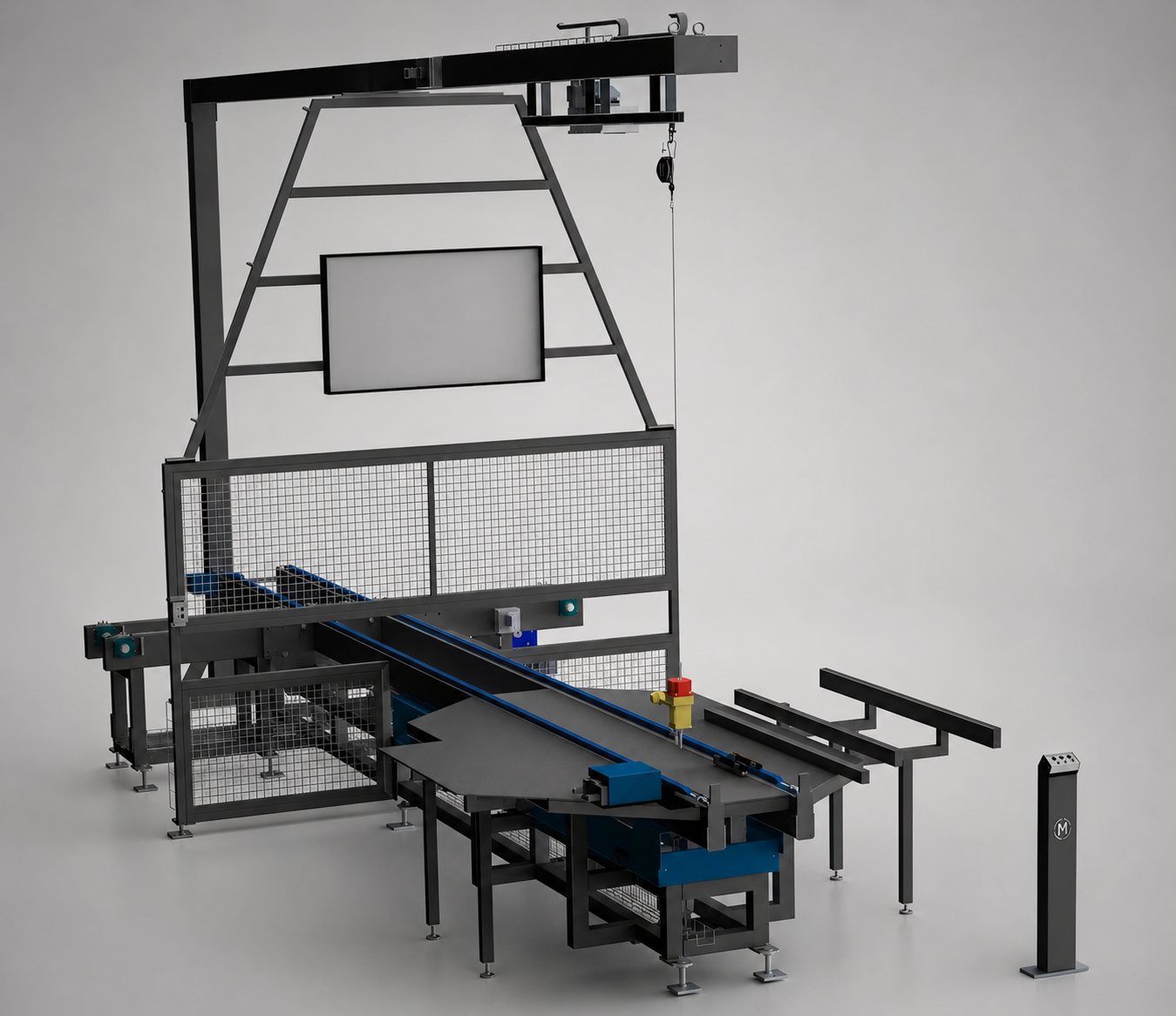
From 1 to 4. A line can have up to three pre-nailing tables and each table adds output; with the automatic pre-nailing table (TP-FA) and the stacking robot, the line can run with a single operator.
Does the line fit my plant?
Yes. The layout is designed in 3D before manufacturing: the 90° turner can be placed at different points of the route and the lifting press (PR+EL) is the answer for plants with little space.
How long has MAYPRO been building reel lines?
The first Cablematic left Vic in 1988 and the first complete LC-FA line in 2012. The Cablematics delivered in 1989 and 1990 are still working today.

Technical advice

Tell us how you work.
We will tell you what suits you.

No two factories are alike. Before we propose anything, our engineering department looks at what you make, how much you need to produce, what your plant is like and how many people you have. Sometimes the answer is a complete line; sometimes a single module or one machine.

And there is more than you see on this website: we have many more modules than the ones shown here and, if your plant needs something that does not exist yet, we design it for you.

What we look at with you

  1. Your productWhat you make or recover, in which sizes and in how many formats.
  2. Your outputHow many units per shift, how many shifts and how much you want to grow.
  3. Your plantThe space, the access points and where the line fits: we send you the layout in 3D.
  4. Your teamHow many people you have today and what you want to automate.

With this, we propose the configuration that suits you.

Request a quote